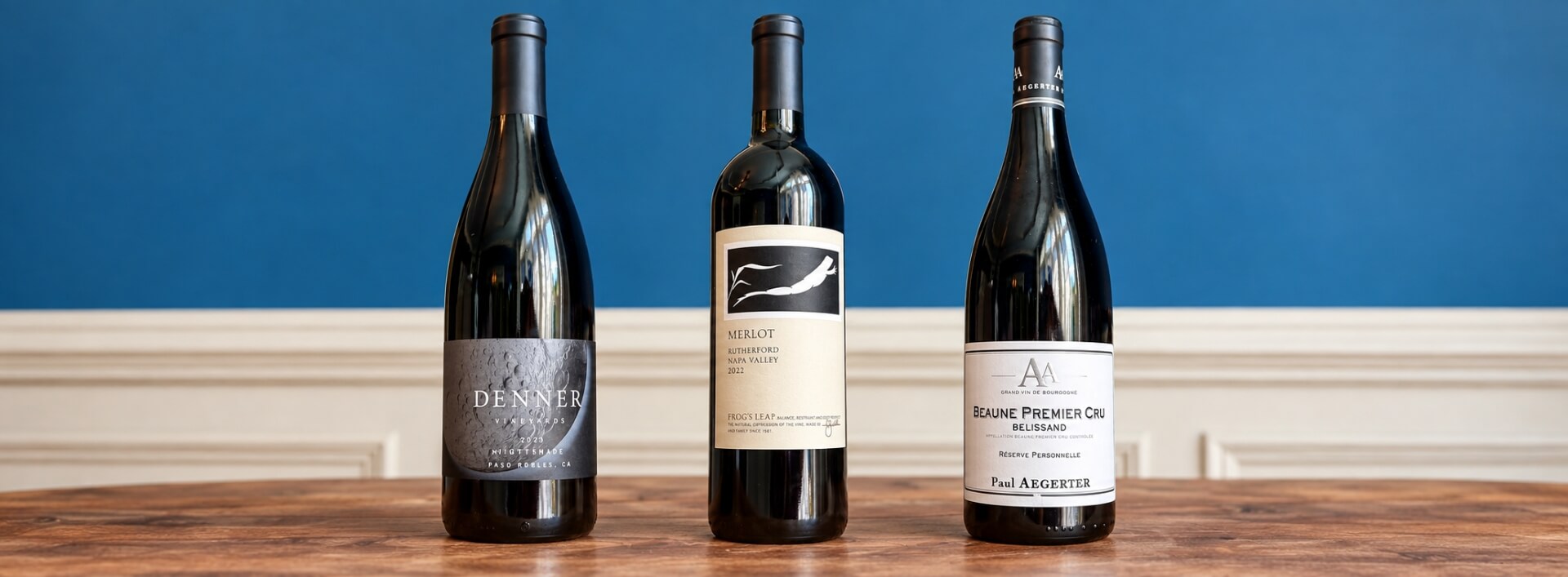
It’s still hot here in NC, but there’s a hint of fall flirting with us in the evenings. I’m ready for sweater weather & red wine!
Some of my fellow wine lovers can drink red wine all year long, but I tend to be a little more seasonal with my wine preferences. Or, as I like to say, I’m not a monogamous wine drinker. Red, white, rosé, sparkling, still—I’m ready to try it all.
But there’s just something about a chill in the air that makes me crave a glass of red.
Maybe it’s the earthy, herbal aromas, the deep, bold color, or the rich and complex flavors. Whatever it is, there’s nothing quite like curling up on the porch with a blanket and a glass of red wine as the seasons begin to change.
So, what should you drink this fall?
Great question. I’d love to tell you.
I’m going to ease in to red wine season with French Pinot Noir or Gamay. Both tend to be lighter-bodied, with less tannin, and they’re delicious served slightly chilled.
And when I say chilled, I don’t mean ice-bucket cold. Give the bottle about 20 minutes in the refrigerator before pouring. If you want to get technical, aim for around 53–57°F.
Too cold? No problem. Wrap your hands around the bowl of the glass for a few seconds and let your body heat do the work.
As we get closer to Halloween, I’ll move into Merlot and Cabernet Franc, before diving into the deep end with Zinfandel and Cabernet Sauvignon as we head into winter.
And while you’re drinking, take a whiff.
Not just a polite little hover over the glass. Get your nose in inside the rim and take a deep inhale. Depending on what you’ve poured, you might find earthy or mossy aromas, red or black fruit, baking spices, white pepper, cocoa, leather, or tobacco.
Basically, all the warm and cozy scents we associate with fall and winter.
Bring on the cozy reds
As a general rule, the fuller-bodied the red, the more weight and intensity you’ll find in the glass. Many fuller-bodied reds also have higher alcohol and more noticeable tannins.
For those bigger reds, you may want to try decanting or using an aerator. Both introduce oxygen to the wine, which can help soften the perception of tannins. No special equipment? Just give your wine a good swirl in the glass. It works, too.
And then there’s the food.
Red wine and fall food are basically peanut butter and jelly. Think beef stew, grilled steaks, hearty pastas, roasted vegetables, and anything involving a rich, cheesy sauce.
There’s actually some science behind why this works. Tannins are naturally occurring compounds in red wine that interact with proteins and fats in food. Fatty, rich foods can soften the perception of tannin, making the wine feel smoother and less drying on your palate.
In other words: that slightly “furry” feeling you get from a big red? A juicy steak can help tame it.
So, as the temperatures start to drop and the evenings get a little cozier, it might be time to fall into red wine season.
What are you drinking this fall—and, more importantly, what are you eating with it?