Light-bodied, full-bodied – we break it all down.
When you hear someone describe a wine as light-bodied or full-bodied, they’re not talking about pants size. So what are they talking about?
In wine, body refers to mouthfeel, how the wine feels on your tongue and across your palate. One of the easiest ways to understand this concept is to think about milk.
A Simple Way to Think About Body: The Milk Comparison
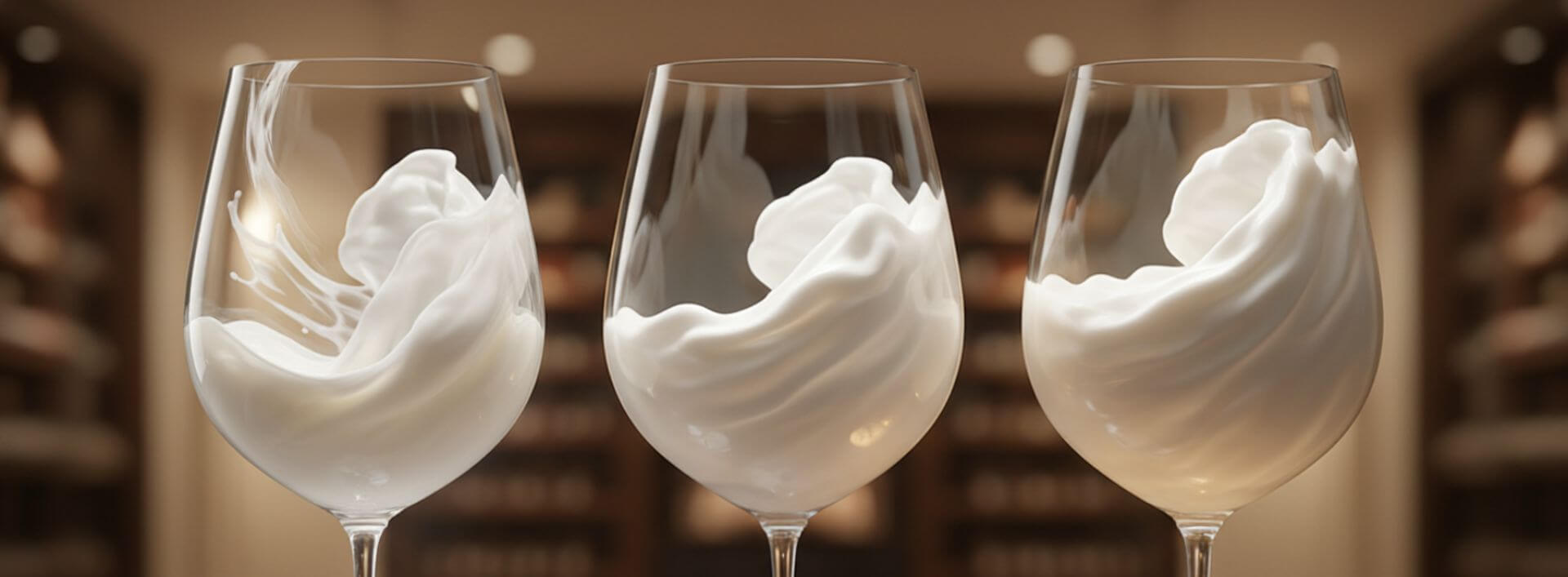
Imagine the difference between skim milk, 2% milk, and whole milk. (Or skim, whole milk and cream.) Each one feels different in your mouth. Skim milk feels thin and light, while whole milk feels richer and heavier. Wine works the same way.
If you swirl milk in a glass, you’ll notice how thicker milk clings to the sides of the glass more than skim milk. This illustrates viscosity, which is closely tied to body. Wine behaves similarly: fuller-bodied wines tend to move more slowly and coat the glass more than lighter-bodied wines.
Light-, Medium-, and Full-Bodied Wines
- Light-bodied wines feel thinner and lighter in the mouth. They are usually higher in acidity, lower in tannins, and have lower alcohol content.
- Medium-bodied wines fall somewhere in between, offering balance without feeling either too heavy or too delicate.
- Full-bodied wines feel richer and heavier, often due to higher alcohol, more tannins, oak aging, or residual sugar.
What Determines the Body of a Wine?
Body isn’t random, and it’s not a mystery reserved for sommeliers. A handful of behind-the-scenes factors shape whether a wine feels light, medium, or full on your palate and once you know what they are, wine labels and descriptions start to make a lot more sense.
Several key elements influence how light or full a wine feels:
Alcohol Content
Alcohol plays a major role in giving wine viscosity and weight.
- Light-bodied wines typically have alcohol levels below 12.5%.
- Examples: Riesling, Pinot Grigio, Pinot Noir, Gamay
- Examples: Riesling, Pinot Grigio, Pinot Noir, Gamay
- Medium-bodied wines usually range from 12.5–13.5%.
- Examples: Grenache Blanc, Sémillon, Sangiovese, Garnacha
- Examples: Grenache Blanc, Sémillon, Sangiovese, Garnacha
- Full-bodied wines are often 13.5% alcohol or higher.
- Examples: Chardonnay, Cabernet Sauvignon
Tannins and Oak Aging
Tannins add structure and grip, increasing a wine’s perceived body. Oak aging (whether in barrels or chips) can also contribute weight and richness, even in white wines.
Grape Variety
Some grapes naturally produce lighter wines, while others are known for fuller styles. The grape’s skin thickness, sugar levels, and flavor compounds all contribute to body.
Climate
Climate has a significant impact on body. Grapes grown in warmer climates ripen more fully and develop higher sugar levels, leading to higher alcohol and fuller-bodied wines. While,gGrapes from cooler climates retain more acidity and tend to produce lighter-bodied wines.
Aging Method
How a wine is aged also affects its body.
- Lighter wines, such as Pinot Grigio, are often aged in stainless steel or concrete tanks to preserve freshness and acidity.
- Fuller wines, like Chardonnay or many red wines, may be aged in oak, which adds texture and weight to the wine.
Other Words You Might Hear
When people talk about a wine’s body, you may also hear terms like density or complexity. While not exactly the same as body, these words often relate to how substantial or layered a wine feels.
Understanding body can help you choose wines you’ll enjoy more, whether you prefer something light and refreshing or rich and powerful. The next time you take a sip, pay attention not just to flavor, but to how the wine feels. That’s body. 🍷
If this helped, don’t forget to join the Triangle Grapevine newsletter below for more wine knowledge without the snobbery and check out our curated list of free and ticketed tastings you can put this newfound knowledge to use!